
Amplify – Amplification of marginalized perspectives and experiences in school mental health promotion to enhance wellness for every student
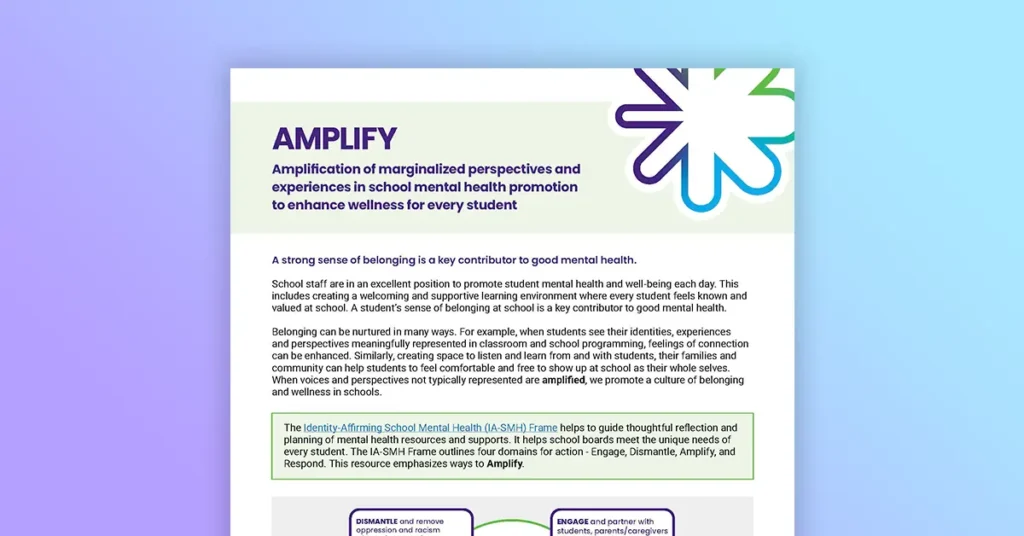
The Amplify resource aligns with the Identity-Affirming School Mental Health Frame and provides practical guidance and strategies for all staff to amplify perspectives and experiences in the everyday work that all school staff can do to promote student mental health and well-being.
Why it is important to amplify marginalized perspectives
A student’s sense of belonging at school is a key contributor to good mental health.
When voices and perspectives not typically represented are amplified, we promote a culture of belonging and wellness in schools.
Every student and family’s experiences and perspectives matter. Some school mental health policies, procedures and practices give more attention to the experiences and views of certain groups over others. This limits the approaches and supports offered and can further marginalize communities. Listening to and valuing the voices of marginalized people, especially Black and Indigenous peoples, helps us learn from a wider range of experiences and ideas.
How might I use this resource?
- Understand what it means to amplify.
- Learn about the history behind practices that devalue perspectives and experiences of racialized and marginalized students and families.
- Consider ways to centre the perspectives of Black, Indigenous and other marginalized groups in mental health promotion at school, to enhance wellness for every student.
- Get some ideas for where to start on this work.
- Discover other resources to support this work.